


Amyotrophic Lateral Sclerosis (ALS) Samples
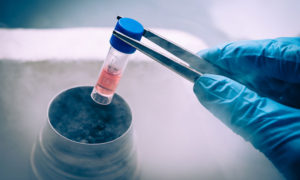
Bay Biosciences provides high quality, clinical grade, fresh frozen sera (serum), plasma and peripheral blood mononuclear cells (PBMC) biofluid samples from patients diagnosed with Amyotrophic Lateral Sclerosis (ALS).
Moreover, the serum, plasma and PBMCs are processed from ALS patient’s whole-blood using customized collection and processing protocols. Furthermore, the samples are collected from patients with ALS and provided to a valued pharmaceutical customer for research and drug development.
Amyotrophic Lateral Sclerosis Overview
In fact, amyotrophic lateral sclerosis (ALS) is a progressive nervous system disease. It affects nerve cells in the brain and spinal cord, causing loss of muscle control. Moreover, amyotrophic lateral sclerosis (ALS) is also known as Lou Gehrig’s disease or motor neuron disease. Consequently, this is a progressive, degenerative disease that destroys the nerve cells that control voluntary muscle movement.
Furthermore, these cells, called “motor neurons,” run from the brain. Through the brainstem or spinal cord to muscles that control movement in the arms, legs, chest, throat, and mouth. As a result, in patients with amyotrophic lateral sclerosis (ALS), these cells die off, causing the muscle tissues to waste away.
Importantly, amyotrophic lateral sclerosis (ALS) does not affect a person’s sensory functions or mental faculties. Additionally, other nonmotor neurons, such as sensory neurons that bring information from sense organs to the brain, remain healthy.”
What is Amyotrophic Lateral Sclerosis (ALS)?
Amyotrophic Lateral Sclerosis (ALS) is a group of rare neurological diseases. That mainly involve the nerve cells (neurons) responsible for controlling voluntary muscle movement. Specifically, voluntary muscles produce movements like chewing, walking, and talking. Furthermore, the disease is progressive, meaning the symptoms get worse over time.
Currently, there is no cure for amyotrophic lateral sclerosis (ALS) and no effective treatment to halt, or reverse, the progression of the disease. In addition, amyotrophic lateral sclerosis (ALS) belongs to a wider group of disorders known as motor neuron diseases. Which are caused by gradual deterioration (degeneration) and death of motor neurons.
Notably, motor neurons are nerve cells that extend from the brain to the spinal cord and to muscles throughout the body. Consequently, these motor neurons initiate and provide vital communication links between the brain and the voluntary muscles.
Motor Neurons
In this context, messages from motor neurons in the brain (called upper motor neurons) are transmitted to motor neurons in the spinal cord and to motor nuclei of the brain (called lower motor neurons). Subsequently, from the spinal cord and motor nuclei of the brain, these messages travel to a particular muscle or muscles.
In amyotrophic lateral sclerosis (ALS), both the upper motor neurons and the lower motor neurons degenerate or die, and consequently, they stop sending messages to the muscles. As a result, the muscles are unable to function; therefore, they gradually weaken, start to twitch (called fasciculations), and waste away (atrophy). Eventually, the brain loses its ability to initiate and control voluntary movements.
Initially, early symptoms of amyotrophic lateral sclerosis (ALS) usually include muscle weakness or stiffness. Gradually, all muscles under voluntary control are affected, and thus, individuals lose their strength and the ability to speak, eat, move, and even breathe.
Moreover, most people with amyotrophic lateral sclerosis (ALS) die from respiratory failure, usually within 3 to 5 years from when the symptoms first appear. However, about 10 percent of people with amyotrophic lateral sclerosis (ALS) survive for 10 or more years.
Types of Amyotrophic Lateral Sclerosis (ALS)
Importantly, amyotrophic lateral sclerosis (ALS) can affect anyone, including both men and women; nevertheless, the risk increases with age. Following this, here are the two types of amyotrophic lateral sclerosis (ALS):
- Sporadic ALS: Sporadic ALS is the most common form of the Amyotrophic Lateral Sclerosis (ALS) disease in the U.S., accounts for 90 to 95 percent of all cases.
- Familial ALS: Familial ALS (FALS) which is an inherited disorder and accounts for 5 to 10 percent of all cases in the United States. In the families with FALS, there is a 50% chance each offspring will inherit the gene mutation and may develop the disease.
Amyotrophic Lateral Sclerosis (ALS) Disease Symptoms
Signs and symptoms of Amyotrophic Lateral Sclerosis (ALS) vary greatly from patient to patient; therefore, depending on which neurons are affected, signs and symptoms might include:
- Difficulty walking or doing normal daily activities
- Tripping and falling
- Weakness in the legs, feet or ankles
- Hand weakness or clumsiness
- Slurred speech or trouble swallowing
- Muscle cramps and twitching in your arms, shoulders and tongue
- Inappropriate crying, laughing or yawning
- Cognitive and behavioral changes
Furthermore, Amyotrophic Lateral Sclerosis (ALS) often starts in the hands, feet, or limbs, and then spreads to other parts of the body. As the disease advances and nerve cells are destroyed, muscles get weaker. Consequently, this eventually affects chewing, swallowing, speaking, and breathing.
It’s important to note that there’s generally no pain in the early stages of Amyotrophic Lateral Sclerosis (ALS); in addition, pain is uncommon in the later stages. Moreover, ALS doesn’t usually affect bladder control or the senses.
Amyotrophic Lateral Sclerosis (ALS) Disease Causes
In fact, ALS disease affects the nerve cells that control voluntary muscle movements such as walking and talking (motor neurons). Amyotrophic Lateral Sclerosis (ALS) causes the motor neurons to gradually deteriorate, and then die. Motor neurons extend from the brain to the spinal cord to muscles throughout the body. When motor neurons are damaged, they stop sending messages to the muscles, so the muscles can’t function. Amyotrophic Lateral Sclerosis (ALS) disease is inherited disorder in 5% to 10% of patients, for the rest, the cause is unknown. Most theories center on a complex interaction between genetic and environmental factors.
Amyotrophic Lateral Sclerosis (ALS) Risk Factors
Established risk factors for Amyotrophic Lateral Sclerosis (ALS) include:
- Heredity: Five to ten percent of the patients with Amyotrophic Lateral Sclerosis (ALS) inherited it (familial ALS). In most patients with familial ALS, their children have a fifty percent chance of developing the disease.
- Age: Amyotrophic Lateral Sclerosis (ALS) disease risk increases with age, and is most common between the ages of 40 and the mid-60s.
- Sex: Before the age of 65, slightly more male patients than female patients develop amyotrophic lateral sclerosis (ALS) disease, this sex difference disappears after age 70.
- Genetics: Some studies examining the entire human genome found many similarities in the genetic variations of patients with familial ALS and some patients with non-inherited ALS. These genetic variations might make people more susceptible to ALS
Environmental Factors
In fact, environmental factors, such as the following, might trigger Amyotrophic Lateral Sclerosis (ALS).
- Smoking: Smoking is the only likely environmental risk factor for developing amyotrophic lateral sclerosis (ALS). The risk seems to be greatest for women patients, particularly after menopause.
- Environmental Toxin Exposure- Some evidence suggests that exposure to lead or other substances in the workplace or at home might be linked to amyotrophic lateral sclerosis (ALS). Much study has been done, but no single agent or chemical has been consistently associated with amyotrophic lateral sclerosis (ALS).
- Military service- Studies indicate that people who have served in the military are at higher risk of developing amyotrophic lateral sclerosis (ALS) disease. It’s unclear what about military service might trigger the development of amyotrophic lateral sclerosis (ALS) disease. It might include exposure to certain metals or toxic chemicals, traumatic injuries, viral infections, and intense exertion.
Amyotrophic Lateral Sclerosis (ALS) Complications
As the disease progresses, amyotrophic lateral sclerosis (ALS) causes complications, such as:
Breathing Problems
Over time, amyotrophic lateral sclerosis (ALS) disease paralyzes the muscles used to breathe. Patient might need a device to help breathe at night, similar to what someone with sleep apnea might wear.
Some patients with advanced amyotrophic lateral sclerosis (ALS) disease choose to have a tracheostomy procedure, a surgically created hole at the front of the neck leading to the windpipe (trachea) for full-time use of a respirator that inflates and deflates their lungs. The most common cause of death for patients with amyotrophic lateral sclerosis (ALS) disease is respiratory failure. On average, death occurs within three to five years after symptoms begin. However, some patients with amyotrophic lateral sclerosis (ALS) disease live 10 or more years.
Speaking Problems
Most patients with amyotrophic lateral sclerosis (ALS) disease develop trouble speaking. This usually starts as occasional, mild slurring of words, but becomes more severe. Speech eventually becomes difficult for others to understand, and people with amyotrophic lateral sclerosis (ALS) disease often rely on other communication technologies to communicate.
Eating Problems
Patients with amyotrophic lateral sclerosis (ALS) disease can develop malnutrition and dehydration from damage to the muscles that control swallowing. They are also at higher risk of getting food, liquids or saliva into the lungs, which can cause pneumonia. A feeding tube can reduce these risks and ensure proper hydration and nutrition.
Dementia
Some patients with amyotrophic lateral sclerosis (ALS) disease have problems with memory and decision-making, and some are eventually diagnosed with a form of dementia called Frontotemporal dementia.
Biospecimens

Bay Biosciences is a global leader in providing researchers with high quality, clinical grade, fully characterized human tissue samples, bio-specimens, and human bio-fluid collections.
Moreover, human biospecimens are available including tumor tissue, serum, plasma and PBMC samples from most other therapeutic areas.
Furthermore, Bay Biosciences maintains and manages its own biorepository, the human tissue bank (biobank) consisting of thousands of diseased samples (specimens) and likewise normal healthy donors for controls. Additionally, available in all formats and types.
In fact, our biobank procures and stores fully consented, de-identified and institutional review boards (IRB) approved human tissue samples, human biofluids such as serum samples, plasma samples from various diseases and matched controls.
Also, all our human tissue collections, human biospecimens and human biofluids are provided with detailed, samples associated patient’s clinical data.
In fact, this critical patient’s clinical data includes information relating to their past and current disease, treatment history, lifestyle choices, biomarkers, and genetic information.
Additionally, researchers find the patient’s data associated with the human biospecimens extremely valuable and use it to help identify new effective treatments (drug discovery & development) in oncology, as well as in other therapeutic areas and diseases.
Bay Biosciences banks wide variety of human tissue samples and human biological samples, including fresh frozen human biospecimens cryogenically preserved at – 80°C.
For example fresh frozen tissue samples, tumor tissue samples, formalin-fixed paraffin-embedded (FFPE), tissue slides, with matching human bio-fluids, whole blood and blood-derived products such as human serum, human plasma and human PBMCs.
Bay Biosciences is a global leader in collecting and providing human tissue samples according to the specified requirements and customized, tailor-made collection protocols.
Please contact us anytime to discuss your special research projects and customized human tissue sample requirements.
Types of Biospecimens
Bay Biosciences provides human tissue samples (human specimens) and human biofluids from diseased and normal healthy donors which includes:
- Peripheral whole-blood
- Amniotic fluid
- Bronchoalveolar lavage fluid (BAL)
- Sputum
- Pleural effusion
- Cerebrospinal fluid (CSF)
- Serum (sera)
- Plasma
- Peripheral blood mononuclear cells (PBMC)
- Saliva
- Buffy coat
- Urine
- Stool samples
- Aqueous humor
- Vitreous humor
- Kidney stones (renal calculi)
- Other bodily fluids from most diseases including cancer.
Moreover, we can also procure most human biospecimens and human biofluids, special collections and requests for human samples that are difficult to find. All our human tissue samples and human biofluids are procured through IRB-approved clinical protocols and procedures.
In addition to the standard processing protocols, Bay Biosciences can also provide human biofluids such as human plasma, human serum, and human PBMCs bio-fluid samples using custom processing protocols; you buy donor-specific collections in higher volumes and specified sample aliquots from us.
Bay Biosciences also provides human biospecimens from normal healthy donors; volunteers, for controls and clinical research, Contact us Now.
- 日本のお客様は、ベイバイオサイエンスジャパンBay Biosciences Japanまたはhttp://baybiosciences-jp.com/contact/までご連絡ください。