


Crohn’s Disease Samples for Research
Bay Biosciences provides high quality clinical grade fresh frozen serum, plasma and peripheral blood mononuclear cells (PBMC) biofluid samples derived from patients whole blood with matching FFPE blocks from unique patients diagnosed with Crohn’s Disease.
Moreover, detailed clinical annotations associated with the Crohn’s disease bio-fluid samples is provided to a valued customer for discovery, development and research.

Crohn’s Disease Overview
Crohn’s disease is an inflammatory bowel disease (IBD). Specifically, it causes chronic inflammation of the gastrointestinal tract, which can lead to abdominal pain, severe diarrhea, fatigue, weight loss, and malnutrition.
Furthermore, this condition involves an abnormal immune response that causes excess inflammation. Moreover, it most often affects the intestinal walls, particularly in the lower part of the small intestine.
In fact, more than half a million Americans are currently affected by Crohn’s disease; however, some estimates are higher, indicating that 3 million Americans are affected by Crohn’s disease.
Inflammation
Additionally, inflammation caused by Crohn’s disease can involve different areas of the digestive tract in different people. In particular, Crohn’s disease most commonly occurs in the small intestine and the colon.
However, it can affect any part of the gastrointestinal tract (GI) from the mouth to the anus. Most commonly, Crohn’s disease affects the end of the small bowel (terminal ileum) and the beginning of the colon. Furthermore, inflammation of the intestine can skip, or leave normal areas in between patches of diseased intestine.
Genetic Factors
Some people are genetically predisposed to develop ileal Crohn’s disease. Moreover, Crohn’s disease can involve some parts of the GI tract and skip other parts. In addition, Crohn’s disease can affect the entire thickness of the bowel wall.
Furthermore, Crohn’s disease is an inflammatory bowel disease that causes chronic inflammation of the gastrointestinal tract.
Additionally, Celiac disease is a serious illness where the body’s immune system attacks its own tissues when you eat gluten. Consequently, this causes damage to the lining of the gut and means the body can’t properly absorb nutrients from food. Notably, Celiac disease is not an allergy or food intolerance.
Specifically, Crohn’s disease can affect any part of the GI tract, from the mouth to the anus; however, it most commonly affects the end of the small bowel (ileum) and the beginning of the colon. Importantly, Crohn’s disease affects the entire thickness of the bowel wall.
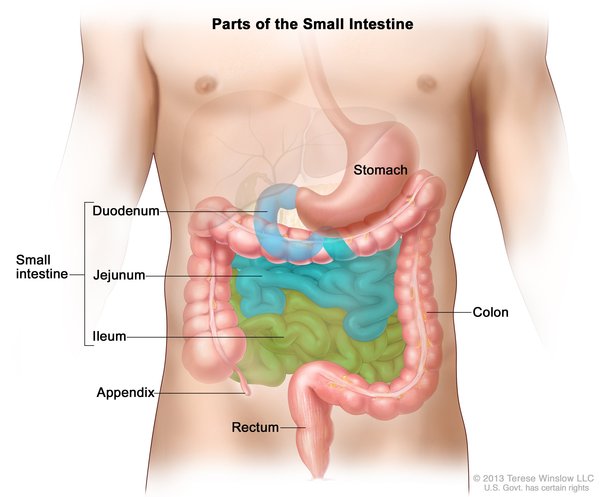
Moreover, inflammation of the intestine can skip or leave normal areas in between patches of diseased intestine. As a result, the inflammation caused by Crohn’s disease often spreads deep into the layers of affected bowel tissue. Ultimately, Crohn’s disease can be both painful and debilitating, and sometimes may lead to life-threatening complications.”
“Some patients with Crohn disease have blood in the stool from inflamed tissues in the intestine; consequently, over time, chronic bleeding can lead to a low number of red blood cells (anemia). In addition, in some cases, Crohn disease can also cause inflammation affecting the joints, eyes, or skin.
Furthermore, more research about Crohn’s disease is necessary. Specifically, researchers aren’t sure how it begins, who is most likely to develop it, or how to best manage it. Despite major treatment advances in the last several decades, unfortunately, no cure is available yet.
Signs and Symptoms of Crohn’s Disease
Crohn’s disease can affect each patient differently. Signs and symptoms of Crohn’s disease often develop gradually. Crohn’s is a chronic disease, which means patients will likely experience periods when symptoms are active, known as flares, followed by periods of remission when may not be notice any symptoms at all. Certain symptoms may also become worse over time. The earliest symptoms of Crohn’s disease can include:
- Constipation which can lead to bowel obstruction
- Persistent Diarrhea
- Abdominal pain
- Cramps
- Rectal bleeding
- Blood in stool
- Feeling as if your bowels aren’t empty after a bowel movement (Tenesmus)
- Frequent need for bowel movements (Fecal incontinence)
Other non GI tract signs and symptoms of Crohn’s Disease:
- Fever
- Fatigue
- Loss of appetite
- Unintentional weight loss
- Redness or pain in the eyes, or vision problems
- Mouth sores
- Swollen and painful joints
- Skin complications, such as bumps, sores, or rashes
- Night sweats
- Irregular menstrual cycle
- Osteoporosis
- Kidney stones
- Rare liver complications, including primary sclerosing cholangitis and cirrhosis
The symptoms may become more severe as the Crohn’s disease progresses, more serious symptoms may include:
- Perianal fistula which causes pain and drainage near your anus
- Ulcers that may occur anywhere from the mouth to the anus
- Inflammation of the joints and skin
- Shortness of breath or decreased ability to exercise due to anemia
Types of Crohn’s Disease
Crohn’s disease affects different people in different parts of the GI tract, it can vary from person to person, the type of Crohn’s disease you have impacts the symptoms and complications you may experience. Following are different types of Crohn’s disease:
- Ileocolitis: This is the most common type of Crohn’s disease. It affects the end of the small intestine (terminal ileum) and the large intestine (colon). Approximately 50% of the Crohn’s disease patients have this variation.
- Ileitis: This type of Crohn’s disease affects only the ileum. About 30% Crohn’s disease patients are affected at this location.
- Gastroduodenal Crohn’s Disease: This type of Crohn’s disease affects the stomach and the beginning of the small intestine, called the duodenum. Around 5% of the Crohn’s disease patients have this type.
- Jejunoileitis: This type of Crohn’s disease is characterized by patchy areas of inflammation in the upper half of the small intestine, called the jejunum. Like gastroduodenal Crohn’s, this variation is less common.
- Crohn’s (Granulomatous) Colitis: This type affects only the colon, also known as the large intestine. Around bout 20% of the Crohn’s disease patients have this variation.
- Perianal disease: This variation of Crohn’s disease involves fistulas, or abnormal connections between tissues, deep tissue infections, as well as sores and ulcers on the outer skin around the anus. Around 30% of the Crohn’s disease patients have this variation.
Causes of Crohn’s Disease
Crohn disease results from a combination of genetic, environmental, and lifestyle factors, many of which are unknown. However, the following factors may influence whether you get it:
- Immune system
- Genes
- Environmental factors
Up to 20 percent of people with Crohn’s disease also have a parent, child, or sibling with the disease, according to the Crohn’s & Colitis Foundation.
According to a 2012 study, certain things can affect the severity of the symptoms. These include:
- Smoking
- Age
- Involvement of the rectum
- Duration of the disease
Crohn’s Disease and Immune System
A normal person’s immune system usually attacks and kills foreign invaders like bacteria, viruses, fungi, and other microorganisms. During a normal immune response, cells travel out of the blood to the intestines and produce inflammation. Under normal circumstances, harmless bacteria that’s present in the GI tract are protected from an immune system attack. In patients with inflammatory bowel disease such as Crohn’s disease and Ulcerative colitis these harmless bacteria are mistaken for foreign invaders and the immune system mounts a response which causes causes excess inflammation. The inflammation caused by the immune response does not go away. This leads to chronic inflammation, ulceration, thickening of the intestinal wall, and the inner surfaces of the digestive system may develop open sores (ulcers), eventually developing Crohn’s disease.
Crohn’s Disease Genetics
Researchers have identified at least 200 genetic variations that influence Crohn disease risk. Crohn’s disease tends to run in families, so if you or a close relative has the disease, your family members have an increased chance of developing Crohn’s. Studies have shown that between 5% and 20% of patients with IBD (Crohn’s disease and Ulcerative Colitis) have a first-degree relative, such as a parent, child, or sibling, who also has one of the diseases. The genetic risk of developing Crohn’s disease is higher than ulcerative colitis.
Many of the major genes related to Crohn disease, including NOD2, ATG16L1, IL23R, and IRGM, are involved in immune system function. The proteins produced from these genes help the immune system sense and respond appropriately to bacteria in the lining of the digestive tract. Many of the proteins play roles in autophagy, which is a process that cells use to surround and destroy bacteria and viruses. Variations in these genes may disrupt autophagy or otherwise alter the immune system’s response to bacteria in the digestive system. In combination with other genetic and environmental factors, these changes can lead to chronic inflammation and result in the digestive problems characteristic of Crohn’s disease.
Environmental Factors and Crohn’s Disease
Environmental and lifestyle factors likely have a large impact on Crohn disease risk. Studies have found that cigarette smoking doubles the likelihood of developing this disease, and it may also play a role in periodic flare-ups of signs and symptoms. Crohn disease is more prevalent in urbanized societies, suggesting that factors related to increased industrialization and sanitation also play a role. Additionally, certain aspects of a person’s diet, including sugar, fats, and fiber, have been proposed to influence Crohn disease risk. Many of the potential lifestyle and environmental risk factors are probably related, directly or indirectly, to abnormal inflammation. However, the exact relationship between these factors and Crohn disease risk remains unclear.
Biospecimens

Bay Biosciences is a global leader in providing researchers with high quality, clinical grade, fully characterized human tissue samples, bio-specimens, and human bio-fluid collections.
Human biospecimens are available including cancer (tumor) tissue, cancer serum, cancer plasma, cancer peripheral blood mononuclear cells (PBMC). and human tissue samples from most other therapeutic areas and diseases.
Bay Biosciences maintains and manages its own biorepository, the human tissue bank (biobank) consisting of thousands of diseased samples (specimens) and from normal healthy donors for controls, available in all formats and types.
In fact, our biobank procures and stores fully consented, de-identified and institutional review boards (IRB) approved human tissue samples, human biofluids such as serum samples, plasma samples from various diseases and matched controls.
Also, all our human tissue collections, human biospecimens and human biofluids are provided with detailed, samples associated patient’s clinical data.
In fact, this critical patient’s clinical data includes information relating to their past and current disease, treatment history, lifestyle choices, biomarkers, and genetic information.
Additionally, researchers find the patient’s data associated with the human biospecimens extremely valuable and use it to help identify new effective treatments (drug discovery & development) in oncology, as well as in other therapeutic areas and diseases.
Bay Biosciences banks wide variety of human tissue samples and human biological samples, including fresh frozen human biospecimens cryogenically preserved at – 80°C.
For example fresh frozen tissue samples, tumor tissue samples, formalin-fixed paraffin-embedded (FFPE), tissue slides, with matching human bio-fluids, whole blood and blood-derived products such as human serum, human plasma and human PBMCs.
Bay Biosciences is a global leader in collecting and providing human tissue samples according to the specified requirements and customized, tailor-made collection protocols.
Please contact us anytime to discuss your special research projects and customized human tissue sample requirements.
Types of Biospecimens
Bay Biosciences provides human tissue samples (human specimens) and human biofluids from diseased and normal healthy donors which includes:
- Peripheral whole-blood
- Amniotic fluid
- Bronchoalveolar lavage fluid (BAL)
- Sputum
- Pleural effusion
- Cerebrospinal fluid (CSF)
- Serum (sera)
- Plasma
- Peripheral blood mononuclear cells (PBMC)
- Saliva
- Buffy coat
- Urine
- Stool samples
- Aqueous humor
- Vitreous humor
- Kidney stones (renal calculi)
- Other bodily fluids from most diseases including cancer.
Moreover, we can also procure most human biospecimens and human biofluids, special collections and requests for human samples that are difficult to find. All our human tissue samples and human biofluids are procured through IRB-approved clinical protocols and procedures.
In addition to the standard processing protocols, Bay Biosciences can also provide human biofluids such as human plasma, human serum, and human PBMCs bio-fluid samples using custom processing protocols; you buy donor-specific collections in higher volumes and specified sample aliquots from us.
Bay Biosciences also provides human biospecimens from normal healthy donors; volunteers, for controls and clinical research, Contact us Now.
- 日本のお客様は、ベイバイオサイエンスジャパンBay Biosciences Japanまたはhttp://baybiosciences-jp.com/contact/までご連絡ください。